


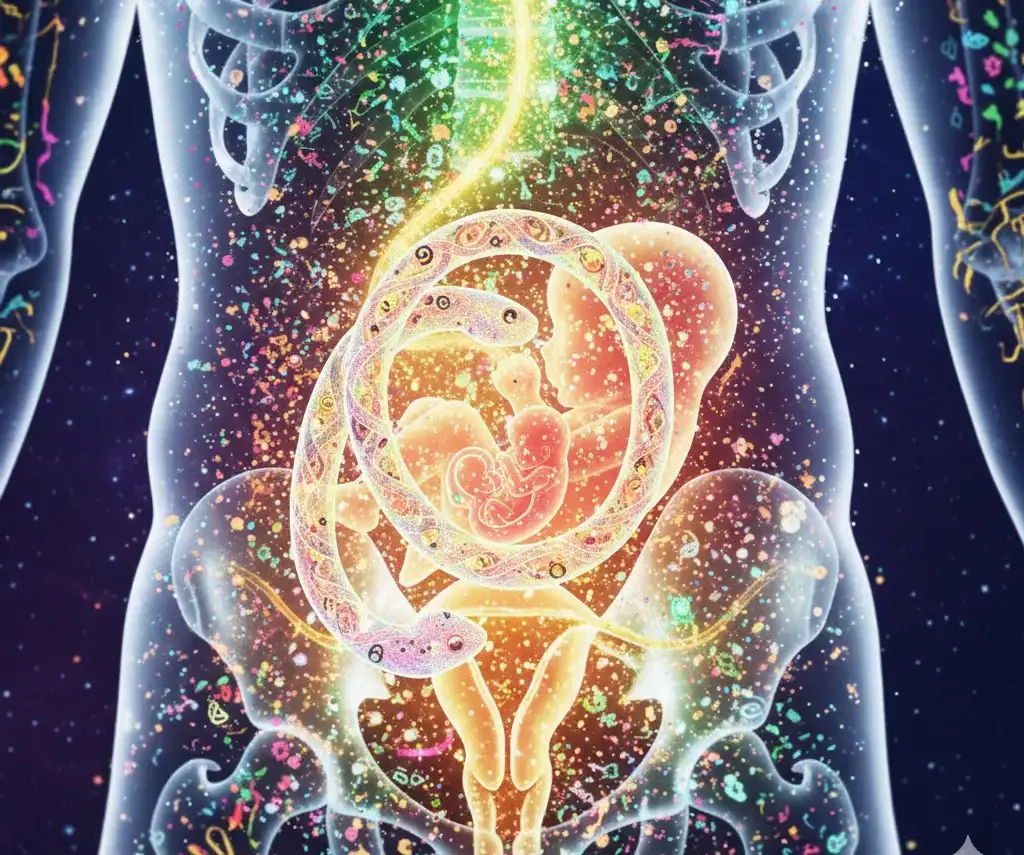
What lies beneath the surface of human life?
Beneath everyday thought, desire, and identity, something remains largely unexamined. Not because it is hidden by design — but because the instruments we ordinarily use to understand ourselves are the very things being examined.
This inquiry does not offer conclusions. It does not ask for belief. It asks only for honest observation — of what is actually moving within us, beneath the stories we tell about who we are.
What follows is not a doctrine. It is a living record of direct observation — open, evolving, and incomplete by intention.
I. The Question of Intellect
We tend to assume that whatever we think, feel, desire, or understand represents the full range of human intelligence. But is this assumption worth examining?
Human intellect, on closer observation, does not appear to be a single uniform faculty. It seems to exist in layers — each governing a specific range of experience, each with its own quality of awareness.
Most of human life, it may be observed, unfolds within the lower functional layers of this structure. Deeper possibilities appear to remain dormant — not because they are unavailable, but because they are rarely recognized, let alone explored.
Here, intellect does not refer to reasoning alone. It points to something more fundamental — the organizing principle through which perception, desire, identity, and our relationship with the world take shape. Understanding this structure may be one of the most consequential inquiries a human being can undertake.
II. The Carnal Self — The Layer Where Most Human Life Operates
The first observable layer of intellect is what this research calls carnal intellect — the level that comes into function with the formation of the body and operates primarily through bodily processes.
Its foundation, on observation, is not reflection or awareness — but desire.
This desire appears limited to sensory experience and survival: pleasure and attraction, fear and avoidance, the preservation of life. When this layer becomes the unexamined center of identity, it gives rise to what may be called the animal self.
This self is not corrupt or inferior — it is natural and, within its own domain, necessary. But it appears to be structurally limited. Its awareness does not readily extend beyond sensation, attachment, satisfaction, and fear.
It becomes problematic not in its existence, but when it develops unchecked into ego — mistaking its own narrow field for the totality of human experience.
The question worth sitting with is this: How much of what I call “myself” is actually this layer operating without my awareness?
III. Carnal Energy — The Root of Division
At the root of the animal self, this research observes what may be called carnal energy — a fundamental life force that expresses itself through the body and gives rise to the basic sense of individual identity.
This energy does not appear to begin as identity. But within the body, it develops a primary sense of being — and its first awareness takes form through what this research identifies as the symbolic expressions of male and female.
These are not merely biological categories. They appear to represent the first points through which this energy recognizes itself — as divided.
What was originally unified now experiences itself as two incomplete aspects, each drawn toward what it perceives as missing. At this level, attraction does not appear to be merely psychological. It seems structural — the movement of divided energy seeking its lost wholeness.
What appears outwardly as attraction between individuals may, on deeper observation, be the self moving toward its own missing aspect.
This is not a moral observation. It is a structural one — and it may be worth observing in one’s own experience before accepting or rejecting it.
IV. When Energy Turns Inward — The Serpent-Like Force
At a certain stage of inner observation, something unexpected may be encountered.
The same energy that ordinarily moves outward — toward sensation, attraction, and fulfillment — can, under certain conditions, be observed turning inward. This research describes this as a living movement within the body: self-active, independent of the senses, and beyond the reach of ordinary mental control.
This is not being presented as imagination or spiritual metaphor. It is being noted as a movement that certain individuals have directly encountered — often without seeking it, and frequently without any framework to understand it.
What makes this movement significant is not its intensity, but its direction. It no longer moves toward the familiar. It moves toward the unknown — toward what this energy itself arises from.
This is distinct from what various traditions have called Kundalini, serpent power, or similar concepts. While surface similarities exist, the framework presented here arises from direct observation rather than inherited tradition, and should be examined on those terms.
At this stage, knowledge is absent. Control is absent. Only direct experience remains. And the quality of desire shifts — from seeking pleasure or fulfillment to something purer: an urge to know the source of the energy itself.
V. Desire as the Expression of Purpose
Desire, on closer observation, may be something other than what it appears.
It presents itself as personal — as my wanting, my craving, my longing. But when observed carefully, desire seems to carry a direction that precedes personal intention. It moves before the individual decides to move.
This research suggests that desire may be understood as the expression of purpose within the body — a movement that belongs not to the individual, but to life itself unfolding through the individual.
This can sometimes be sensed as a subtle inner movement, particularly in moments of genuine stillness — not manufactured calm, but the natural quieting that occasionally arises on its own.
Consider the drone in a beehive. The drone is a separated entity whose sole function is continuity — to fulfill a specific purpose and then dissolve. Its end is not failure. It is completion. The dissolution is the fulfillment.
Something analogous may be observable in human experience. What we call desire may be a separated current of life — moving, persisting, seeking — whose true completion is not the satisfaction of wanting, but the return of that movement to its origin.
In ordinary life, this movement continues without resolution. But the possibility of a different outcome appears to exist.
VI. The Two Energies and the Creation of Life
Beyond the body, this research points toward a single fundamental energy that appears to precede biological form itself.
This energy seems to organize life — structuring matter into living existence — yet cannot be reduced to any physical process. Through it, existence appears divided into male and female. But this research suggests that division is functional, not ultimate.
Originally unified, this energy appears to become confined within the body and is experienced as desire. And at the bodily level, desire cannot be fully resolved. The body can express it — but it cannot complete it. Because the source of this energy appears to lie beyond the body itself.
This is an observation that invites personal examination — not belief.
VII. The Inner Ascent — When Energy Returns to Its Origin
When the carnal self comes into contact with genuine understanding — not borrowed knowledge, but something directly encountered — a shift appears to become possible.
The same energy that was previously confined within the dual expressions of male and female may begin to move toward its origin. This movement is not physical. It is a structural shift within consciousness itself — subtle, often gradual, and not easily described from the outside.
As this movement unfolds, certain changes may be observed:
The gross expression of energy becomes more subtle. Attachment to form begins to loosen. Identity begins to shift — from the experience of division toward something more unified.
Desire does not disappear in this process. It transforms. It is no longer primarily directed toward external attraction or fulfillment. It becomes something quieter — a deep movement toward knowing its own source.
This is not an achievement to be pursued. It appears to be a natural unfolding — when the conditions for it are genuinely present.
VIII. The Fulfillment of Desire
Desire, this research observes, is not resolved through satisfaction — nor through suppression or discipline.
It appears to find resolution only when it returns to its source.
Like the drone whose dissolution is its completion, the separated self in humans may find its truest fulfillment not in continued seeking, but in the return of its movement to the origin from which it arose.
This is not an end in the ordinary sense. It is a com
IX. The Birth of Human Wisdom
When this movement resolves into its source, a different quality of awareness appears to emerge.
This research calls it human wisdom — not as an achievement, but as what naturally remains when the movement of division comes to rest.
This wisdom does not appear to be driven by lack, attraction, or the urge to become something. It arises from the settling of division itself. The masculine and feminine — no longer experienced as separate, incomplete identities — appear to become unified principles within a single undivided awareness.
Consciousness, at this point, is no longer seeking. It becomes still, clear, and whole.
This is not a state to be manufactured. It is what remains when what was layered on top of it falls away.
X. The Hidden Human
The Hidden Human is not a concept to be understood intellectually.
It is what becomes visible when the movement of desire reaches its natural completion — when the seeker, having followed the movement all the way to its source, dissolves into what was always already there.
Most human life unfolds within the movement of desire — mistaking that movement for life itself. This is not a judgment. It is simply an observation of where awareness tends to rest.
But the possibility of something else appears to exist.
Not attainment — but alignment. Not becoming — but being. Not searching — but the silence that was always beneath the search.
This is not an achievement. It is the fulfillment of human existence — available not through practice or belief, but through honest, sustained observation of what is already moving within us.
The Hidden Human stands as the witness of the One Creator — not as a destination, but as a recognition of what was never truly absent.
This research is ongoing. The observations presented here are not conclusions — they are invitations to look more closely at what is already present within human experience. Hidden Human welcomes those who wish to engage with this inquiry directly.